
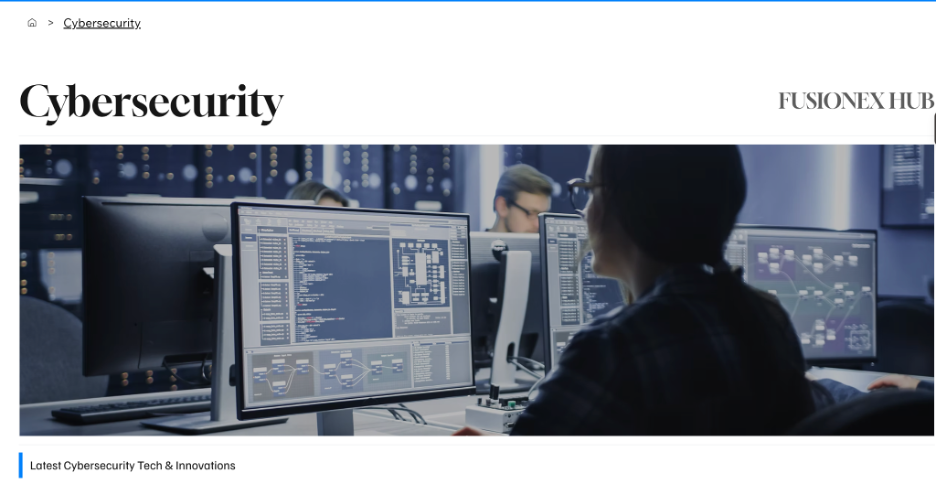
July, 2026, Singapore – As cyberattacks become increasingly sophisticated, organizations are discovering that conventional cybersecurity strategies are no longer enough to defend against today’s complex digital threats. Security operations centers (SOCs) are inundated with millions of security events daily, making it increasingly difficult for analysts to distinguish genuine threats from false alarms. According to insights shared by Fusionex Hub, Augmented Intelligence (AIg) is emerging as a game-changing approach that combines artificial intelligence with human expertise to create faster, smarter, and more proactive cyber defense strategies.
Rather than replacing cybersecurity professionals, Augmented Intelligence enhances their capabilities by automating repetitive tasks, uncovering hidden attack patterns, and delivering actionable intelligence that empowers analysts to make better decisions.
The Shift from Traditional Security to Intelligent Collaboration
Cybersecurity has evolved dramatically over the past decade. Signature-based detection systems and manual investigations once formed the backbone of enterprise security, but modern cybercriminals now employ advanced techniques that easily evade conventional defenses.
Augmented Intelligence introduces a collaborative model where machine learning algorithms process enormous volumes of security data while human analysts provide strategic thinking, contextual judgment, and investigative expertise.
This partnership enables organizations to respond more effectively to evolving threats without sacrificing the critical role of human decision-making.
Making Sense of Massive Security Data
Modern enterprises generate enormous amounts of security information every second—from firewall logs and cloud applications to endpoint devices and employee activities.
Without intelligent automation, security teams often struggle to investigate every alert, resulting in delayed responses and alert fatigue.
Augmented Intelligence addresses this challenge by continuously analyzing data from multiple sources simultaneously. Instead of overwhelming analysts with thousands of notifications, AIg platforms identify the most critical risks, prioritize incidents based on severity, and provide recommendations for further investigation.
This streamlined workflow allows cybersecurity professionals to spend less time filtering alerts and more time stopping genuine attacks.
Machine Learning Enhances Threat Detection
At the core of Augmented Intelligence are sophisticated machine learning models capable of recognizing behaviors that traditional security software might overlook.
Unlike static detection methods, these models continuously improve as they learn from historical attack data, user activities, and changing threat landscapes.
Key capabilities include:
- Behavioral analytics that identify unusual user or device activity.
- Anomaly detection that flags suspicious network traffic before significant damage occurs.
- Threat intelligence correlation that combines external cyber intelligence with internal enterprise data for deeper context.
- Adaptive learning that refines detection accuracy over time as analysts validate findings.
By leveraging these technologies, organizations can significantly reduce false positives while improving the speed and accuracy of threat detection.
From Reactive Security to Predictive Defense
One of the most valuable aspects of Augmented Intelligence is its ability to shift cybersecurity from a reactive discipline to a predictive one.
Instead of waiting until an attack has already compromised systems, AIg continuously hunts for indicators of compromise (IOCs), suspicious behaviors, and emerging attack techniques.
Advanced predictive models can even simulate attacker tactics, techniques, and procedures (TTPs), allowing security teams to anticipate how cybercriminals may attempt to infiltrate their environments.
These insights help organizations strengthen vulnerable systems, prioritize software patching, improve access controls, and enhance network segmentation before an attack takes place.
Improving Analyst Productivity
Cybersecurity talent remains one of the most sought-after resources worldwide. With skilled professionals in short supply, maximizing analyst productivity has become a strategic priority.
Augmented Intelligence assists by automatically summarizing investigations, generating visual threat maps, and presenting natural-language explanations that simplify complex security events.
Rather than manually correlating thousands of log entries, analysts receive contextual intelligence that accelerates investigation and response.
Human analysts remain firmly in control through a “human-in-the-loop” approach, where they validate AI-generated findings and continuously improve machine learning accuracy through feedback.
This collaboration creates a continuously improving security ecosystem that becomes more effective over time.
Industry Adoption Continues to Grow
Organizations across multiple industries are already integrating Augmented Intelligence into their cybersecurity operations.
Financial Services
Banks and financial institutions leverage AIg to identify fraudulent transactions, insider threats, and sophisticated account takeover attempts in real time while protecting sensitive customer information.
Healthcare
Healthcare providers use intelligent threat hunting to safeguard patient records, monitor connected medical devices, and maintain compliance with increasingly stringent privacy regulations.
Retail
Retail organizations rely on AIg-powered Security Operations Centers (SOCs) to monitor point-of-sale systems, e-commerce platforms, and supply chain networks against cyber threats.
Manufacturing
Industrial organizations deploy Augmented Intelligence to secure Operational Technology (OT) environments from ransomware attacks, industrial espionage, and production disruptions that could impact critical infrastructure.
These real-world applications demonstrate the versatility of AIg across industries where cybersecurity has become essential for business continuity.
Preparing for the Future of Cybersecurity
The cybersecurity landscape will continue to evolve as attackers adopt artificial intelligence to automate phishing campaigns, exploit vulnerabilities, and evade detection.
Organizations must therefore adopt equally intelligent defensive technologies capable of learning, adapting, and responding at machine speed.
Augmented Intelligence provides a balanced approach by combining the computational power of artificial intelligence with the strategic thinking and experience of cybersecurity professionals.
Instead of replacing human expertise, AIg strengthens it, enabling organizations to build more resilient and adaptive security operations.
Fusionex Hub’s Perspective on Intelligent Cyber Defense
At Fusionex Hub, emerging technologies are viewed not simply as innovations but as strategic tools that enable organizations to navigate increasingly complex digital environments.
Augmented Intelligence represents one of the most promising developments in enterprise cybersecurity because it bridges the gap between massive volumes of security data and meaningful, actionable intelligence.
As cyber threats become more sophisticated and persistent, businesses that embrace AI-powered collaboration will be better equipped to detect attacks earlier, reduce operational risk, and maintain customer trust in an increasingly connected world.
For more insights on artificial intelligence, cybersecurity innovation, and enterprise digital transformation, visit https://www.fusionexhub.com/.
Frequently Asked Questions (FAQs)
What is Augmented Intelligence in cybersecurity?
Augmented Intelligence (AIg) combines artificial intelligence, machine learning, and human expertise to improve cyber threat detection, investigation, and response without replacing security professionals.
How does AIg improve threat hunting?
AIg continuously analyzes security data, detects anomalies, prioritizes high-risk alerts, and recommends investigation steps, allowing analysts to identify threats more quickly and accurately.
Is Augmented Intelligence the same as Artificial Intelligence?
No. Artificial Intelligence aims to automate tasks independently, while Augmented Intelligence focuses on enhancing human decision-making through intelligent assistance and collaboration.
Which industries benefit from AIg-powered cybersecurity?
Financial services, healthcare, retail, manufacturing, government agencies, and any organization managing large-scale digital infrastructure can benefit from AIg-driven threat hunting.
Where can businesses learn more about AI and enterprise technology?
Organizations can explore the latest insights into AI, cybersecurity, blockchain, and digital transformation by visiting https://www.fusionexhub.com/.
About FusionexHub.com
Fusionex Hub is a content-first platform and vibrant online community created for anyone passionate about technology—whether you’re a beginner exploring the digital world or a professional staying ahead of the curve.
We aim to connect like-minded individuals through shared knowledge, continuous learning, and real-world tech conversations. From smart tech, AI, and deep learning to cloud computing, cybersecurity, IIoT, IR4.0, and beyond, Fusionex Hub delivers fresh insights and thought leadership across a wide range of topics.
- Stay updated with the latest tech trends
- Discover real-world applications and best practice
- Learn from professionals and community contributors
- Join discussions and exchange ideas
At Fusionex Hub, we believe knowledge grows stronger when it’s shared—encouraging meaningful, ongoing learning in a collaborative digital space.
Media Contacts:
Jonathan Smith
www.fusionexhub.com